
Introduction
India doesn’t do “mild weather.” It does humidity that clings, heat that fades colors, and monsoons that test your life choices.
Yet somehow, leather handbags continue to be marketed as the ultimate everyday luxury. Premium. Timeless. Investment-worthy.
Sounds convincing. Until you actually use one daily in Mumbai, Delhi, or literally any Indian city.
Here’s the uncomfortable truth. Most handbags sold as “luxury essentials” are not designed for Indian conditions. And leather, despite its reputation, often struggles more than people admit.
Let’s break this down properly to see what works and what quietly fails.
The Reality of Leather in Indian Conditions
1. Humidity Is Not Leather’s Friend
Leather is porous. That means it absorbs moisture.
In humid cities like Mumbai or Chennai, this leads to:
-
Surface damage
-
Loss of structure
-
That unmistakable damp smell
2. Sunlight Causes Drying and Cracking
Leather begins to dry out when expose to direct sun light daily:
-
It loses its natural oils
-
The surface stiffens
-
Cracks begin to appear
3. Daily Use Accelerates Wear
Here’s where most people get misled.
Leather is often positioned as a long-term investment. But that assumes occasional use. Not everyday friction, stuffing, travel, and sun exposure.
With regular use:
-
Corners wear out first
-
Edges start peeling or fading
-
Shape begins to collapse
The irony? The more you use it, the faster it ages.
4. Maintenance Is Not Optional
Leather demands care. And not the kind most people realistically give.
You need:
-
Conditioning
-
Proper storage
-
Protection from water
-
Regular cleaning
Skipping this, will result in the bag deteriorating faster than expected.
The Ethical Question Around Leather
This part is often avoided in mainstream conversations.
Leather is derived from animal hides. That is a fact.
As consumers become more conscious, questions are being asked:
-
Where does the material come from?
-
What processes are involved?
-
Is there a more responsible alternative?
So What Actually Works for Daily Use in India?
Here’s where the conversation shifts.
Instead of asking “Is leather luxurious?” the better question is:
Is this material built for my lifestyle?
For Indian conditions, practicality matters more than perception.
Materials engineered for durability offer:
-
Resistance to moisture
-
Better performance in heat
-
Lower maintenance
-
Consistent structure over time
-
No pealing or cracking due to regular use
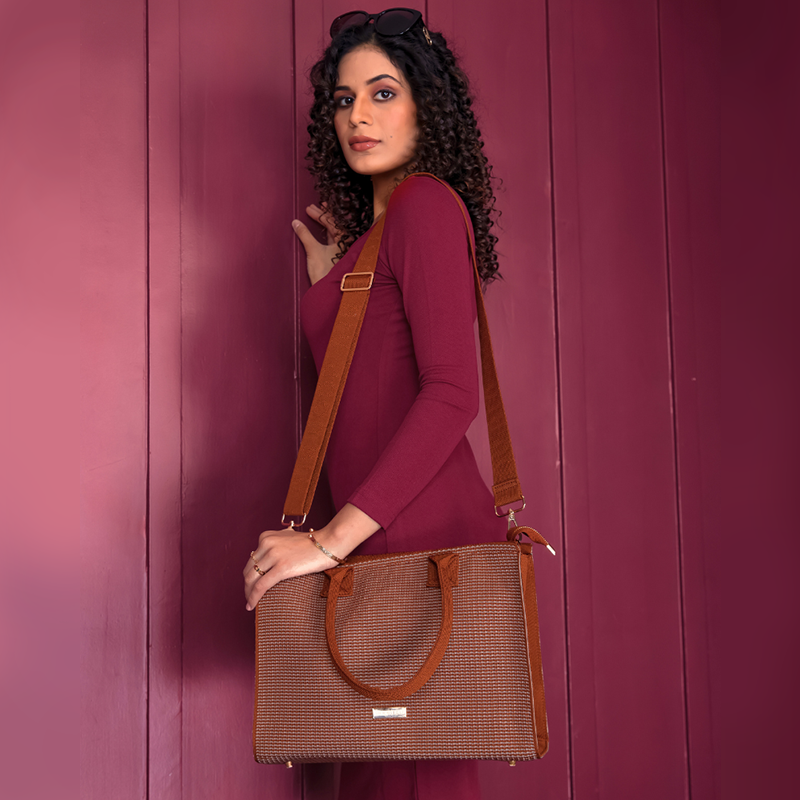
For example, modern knitted materials made from recycled fibers are designed differently. They are flexible yet strong. They handle water better. They do not crack under sunlight in the same way. And most importantly, they are built for repeated, everyday use.
The Bigger Shift in Consumer Thinking
Time is changing and so is consumer shopping behavior.
Buyers are starting to question:
-
Longevity over branding
-
Function over perception
-
Value over price tags
A bag is no longer just about how it looks on day one. It is about how it performs on day one hundred.
And this is where traditional narratives begin to fall apart.
Conclusion
Leather is not a bad material. It just isn’t always the right one.
Especially not for the realities of Indian weather and everyday use.
The problem is not that consumers are choosing wrong. It is that they are not being told the full story.
Once you understand how different materials behave in real conditions, the decision becomes simpler.
Some bags are designed to be admired.
Others are designed to be used.
The smartest choice is knowing the difference.